Image Gallery:
FG Strengthens Livestock Genetic Conservation with Unified National Protocols
Stakeholders in Nigeria’s livestock sector have validated a set of harmonised national protocols aimed at strengthening the characterisation, inventory, and monitoring of Animal Genetic Resources (AnGR) in the country, as part of ongoing efforts to improve livestock breeding, conservation, and data-driven policymaking.
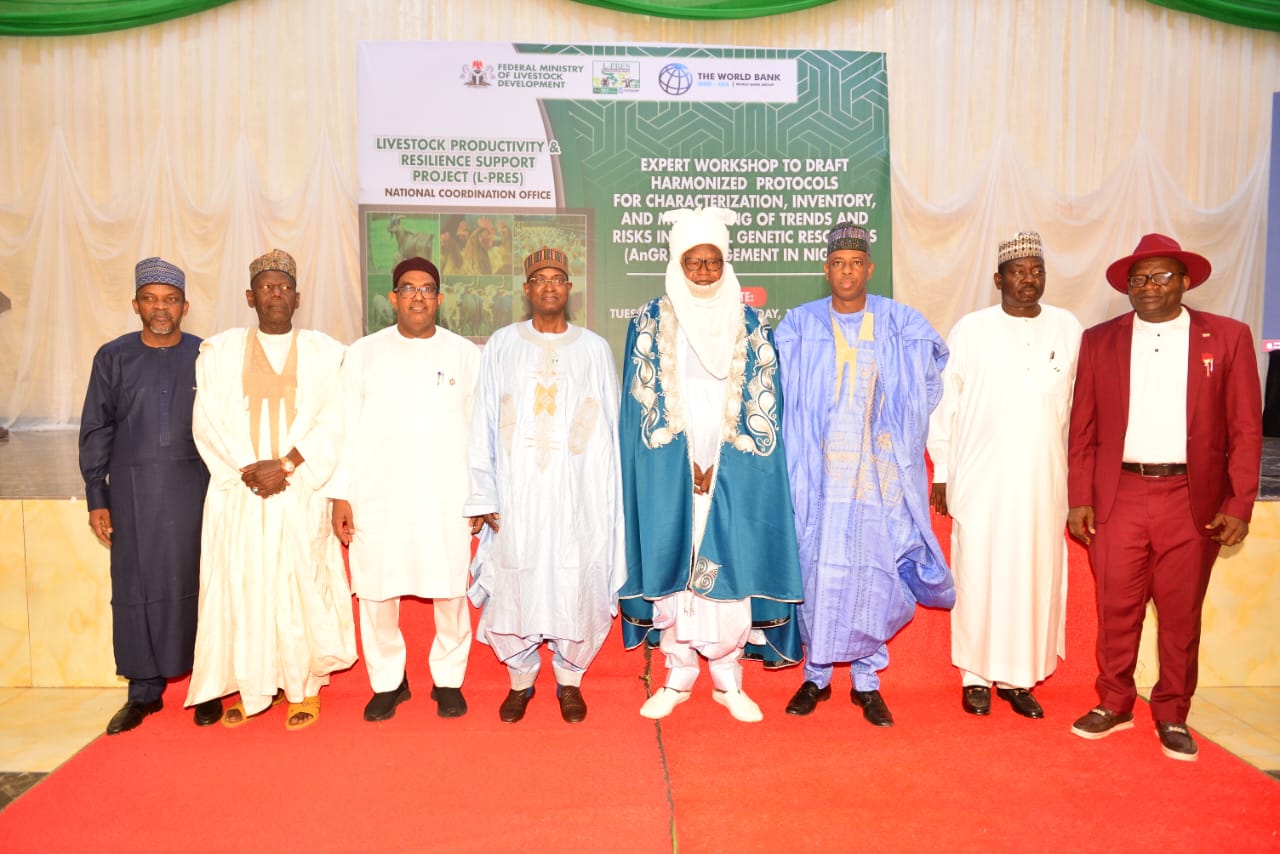
The protocols were validated at the end of a five-day National Workshop on the Review and Validation of the Harmonised Protocols for Characterisation, Inventory, and Monitoring of Trends and Associated Risks in Animal Genetic Resources Management in Nigeria, held from 28th April–5th May 2026 in Abuja.
The workshop, organised by the National Coordination Office of the Livestock Productivity and Resilience Support (L-PRES) Project under the Federal Ministry of Livestock Development, brought together genetic experts, researchers, policymakers, livestock breeders, development partners, and private sector representatives.
Participants reviewed and validated key documents including harmonised protocols for animal genetic characterisation, inventory and monitoring frameworks, national data collection templates, conservation plans for endangered breeds, policy briefs, finance and investment plans, as well as communication and advocacy strategies.
The workshop also endorsed the proposed Nigerian Domestic Animal Diversity Information System (NigDAD-IS) and an AnGR Dashboard to support data analytics, breed monitoring, and interoperability with global platforms such as FAO’s DAD-IS, ILRI’s DAGRIS, and AU-IBAR’s AAGRIS.
Declaring the workshop open, the Honourable Minister of Livestock Development, Idi Mukhtar Maiha, stressed the urgent need for harmonised protocols to strengthen Nigeria’s livestock breeding and conservation systems.
“Without accurate baseline data, it is impossible to design appropriate breeding objectives or determine which breeds are best suited for specific agro-ecological zones,” the Minister stated.
He further noted that continuous monitoring systems are essential to detect early signs of genetic erosion, mitigate extinction risks, and support timely interventions such as conservation programmes and improved breeding strategies.
Country Representative of the Food and Agriculture Organization (FAO), Dr. Hussein Gadain, reaffirmed the organisation’s commitment to supporting Nigeria’s livestock transformation agenda through technical collaboration and institutional support.
“Veterinary and genetic services remain the first line of defence in protecting animal health, ensuring food safety, and maintaining market stability,” he said, while calling for stronger governance systems, improved surveillance mechanisms, and enhanced laboratory capacity.
Speaking at the close of the workshop, the National Project Coordinator of L-PRES, Dr. Sanusi Abubakar, described the validation as a major step toward operationalising Nigeria’s National Strategy and Action Plan on Animal Genetic Resources launched in June 2025.
According to him, the validated protocols are aligned with FAO standards and form part of broader efforts toward establishing a national gene bank and strengthening livestock breeding systems in Nigeria.
He disclosed that stakeholders had also agreed on implementation timelines running through the end of the year, covering communication and advocacy, data collection, and collaboration with technical partners including the FAO.
Henrietta Okokon
Deputy Director, Information and Public Relations
6th May, 2026

Comments on Post (0)