
Image Gallery:
FG Unveils Revised Agricultural Curriculum to Strengthen Livestock Skills
The Federal Ministry of Livestock Development has called for stronger practical training and industry partnerships in agricultural education to develop the skilled workforce required to transform Nigeria’s livestock sector, create jobs and expand economic opportunities.
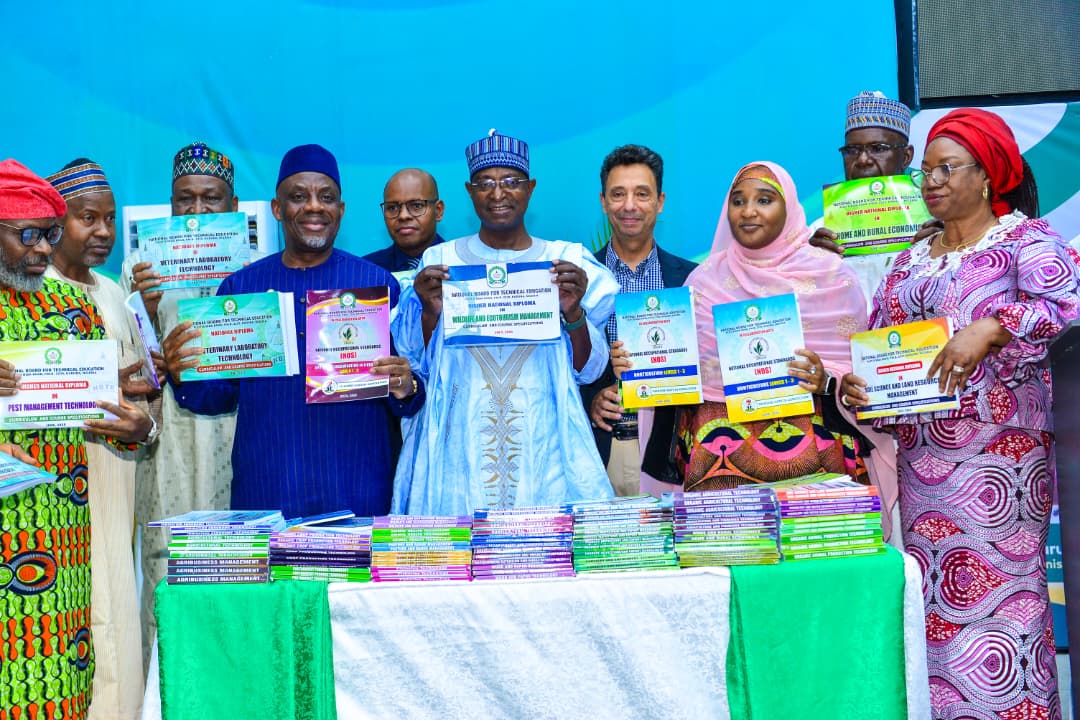
The Honourable Minister of Livestock Development, Idi Mukhtar Maiha, stated this on Monday, October 19, 2026, at the unveiling of Nigeria’s reviewed agricultural curricula and national occupational standards for technical and vocational education and training (TVET) institutions and Colleges of Education.
Maiha described the initiative as an important step towards aligning education with industry needs, noting that the livestock sector offers substantial opportunities for investment, entrepreneurship, import substitution, export expansion and employment generation.
“The livestock sector is vital to Nigeria’s food and nutrition security, employment, livelihoods, industrial development and economic growth. It also offers significant opportunities for investment, entrepreneurship, import substitution and export expansion,” he said.
The Minister further explained that unlocking these opportunities requires skilled professionals with practical competencies in animal production, breeding, nutrition, animal health, biosecurity, pasture development, processing, marketing and other livestock value-chain activities.
“The value of that market is about 3.2 billion dollars. We have the livestock, we have the land resources, we have the skill level. But that issue of having practical experience for people who manage ranches end to end, from field to fork, we don't have it. And therefore, this exercise today is a step in the right direction,” Maiha said.
He stressed that training institutions must provide students with opportunities to acquire practical experience in modern livestock production systems, adding that every agricultural training institution should have access to functional farms and livestock facilities.
“Our goal must be to move beyond producing job seekers to developing skilled professionals, innovative entrepreneurs and job creators,” he said, while urging stakeholders to prioritise inclusive access to skills development for women, young people, smallholder farmers and rural communities.
In his remarks, the Honourable Minister of Education, Dr Maruf Olatunji Alausa, commended the institutions, industry partners and stakeholders involved in the curriculum review, describing the reform as part of the Federal Government’s commitment to connecting education with national development priorities.
He noted that agricultural education must respond to changing technologies, modern production methods and the demands of industry, stressing that graduates should be equipped to apply their knowledge and create economic value.
Dr. Alausa stressed the need to modernise agricultural training facilities, including farms, processing centres, greenhouses and other practical learning environments. He also called for stronger coordination among regulatory agencies to align institutional adoption, assessment, monitoring and accreditation with the revised curriculum and occupational standards.
Similarly, other key stakeholders such as the United Nations Educational, Scientific and Cultural Organization, the National Universities Commission and the Embassy of France among others, welcomed the curriculum review, stressing that effective implementation would require capable trainers, appropriate equipment, meaningful assessments and opportunities for workplace learning.
Henrietta Okokon
Head, Press and Public Relations
19th October, 2026




Comments on Post (0)