Image Gallery:
FG Targets Vaccine Self-Sufficiency Through NVRI Reforms
The Honourable Minister of Livestock Development, Idi Mukhtar Maiha, has reaffirmed the Federal Government’s commitment to repositioning the National Veterinary Research Institute (NVRI) for enhanced vaccine production, disease control, and private sector-driven growth as part of broader livestock sector reforms.
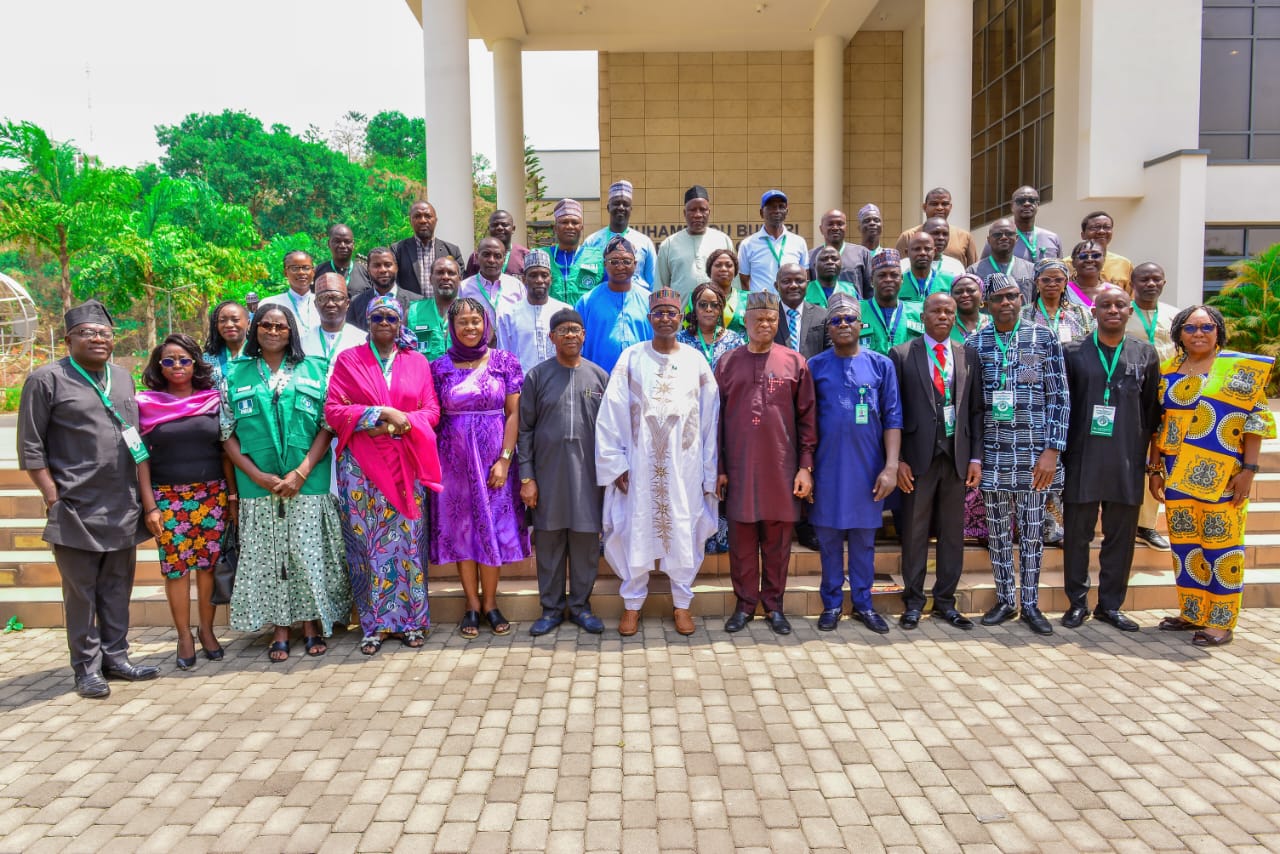
The Minister made this known during the three-day NVRI Top Management Retreat, held from 3rd - 5th March 2026, where management staff of the Institute reviewed institutional performance, operational gaps, and strategic pathways for transformation after over a century of existence.
Speaking at the retreat, the Minister disclosed that despite more than 100 years since its establishment, NVRI currently meets less than 40 per cent of Nigeria’s local animal vaccine demand, a development he described as both a challenge and an opportunity for strategic reform.
He noted that Nigeria presently spends approximately $1.5 billion annually on vaccine importation, stressing the urgent need to strengthen domestic production capacity. He therefore charged the Institute to align its operations with national economic priorities by working towards reducing the country’s vaccine import bill by at least $500 million by the year 2030.
According to the Minister, opening the Institute to structured private sector investment and partnerships remains critical to achieving sustainable growth and commercial viability.
Maiha also emphasised that effective animal disease management remains central to unlocking Nigeria’s livestock economy, noting that persistent transboundary and endemic animal diseases continue to limit the country’s access to lucrative regional and international red meat markets.
He disclosed that Nigeria’s beef industry holds an estimated export potential of about $3.2 billion, which can only be realised through strengthened vaccine production, surveillance, and diagnostic systems.
Earlier in his remarks, the Chief Veterinary Officer of Nigeria, Dr. Samuel Anzaku, described NVRI as one of the nation’s most strategic animal health institutions, playing a pivotal role in disease diagnosis, surveillance support, vaccine production, and scientific advisory services for both Nigeria and neighbouring countries.
"The Office of the Chief Veterinary Officer depends heavily on the technical outputs of NVRI to fulfill national and international obligations. Timely, accurate and properly structured laboratory data are indispensable for early warning, risk assessment, outbreak response, international reporting, and policy formulation," he noted.
Also speaking, the Acting Executive Director of NVRI, Dr. Nicholas Nwankpa, explained that the retreat was convened to critically assess the Institute’s current capacity, identify operational gaps, and develop innovative strategies aligned with the vision of the Federal Ministry of Livestock Development.
He highlighted key mandate areas of the Institute to include vaccine production, research and development on emerging and re-emerging animal diseases, national diagnostic services, and extension support to livestock farmers.
The retreat, themed “Strengthening Our Mandate through Enhanced Stewardship, Transformational Leadership and Strategic Institutional Capacity Training,” is expected to produce actionable reforms aimed at modernising NVRI into a globally competitive veterinary research and vaccine production institution supporting Nigeria’s livestock transformation agenda.
Oghenekevwe Uchechukwu
Head, Press and Public Relations
4th March, 2026.

Comments on Post (0)